
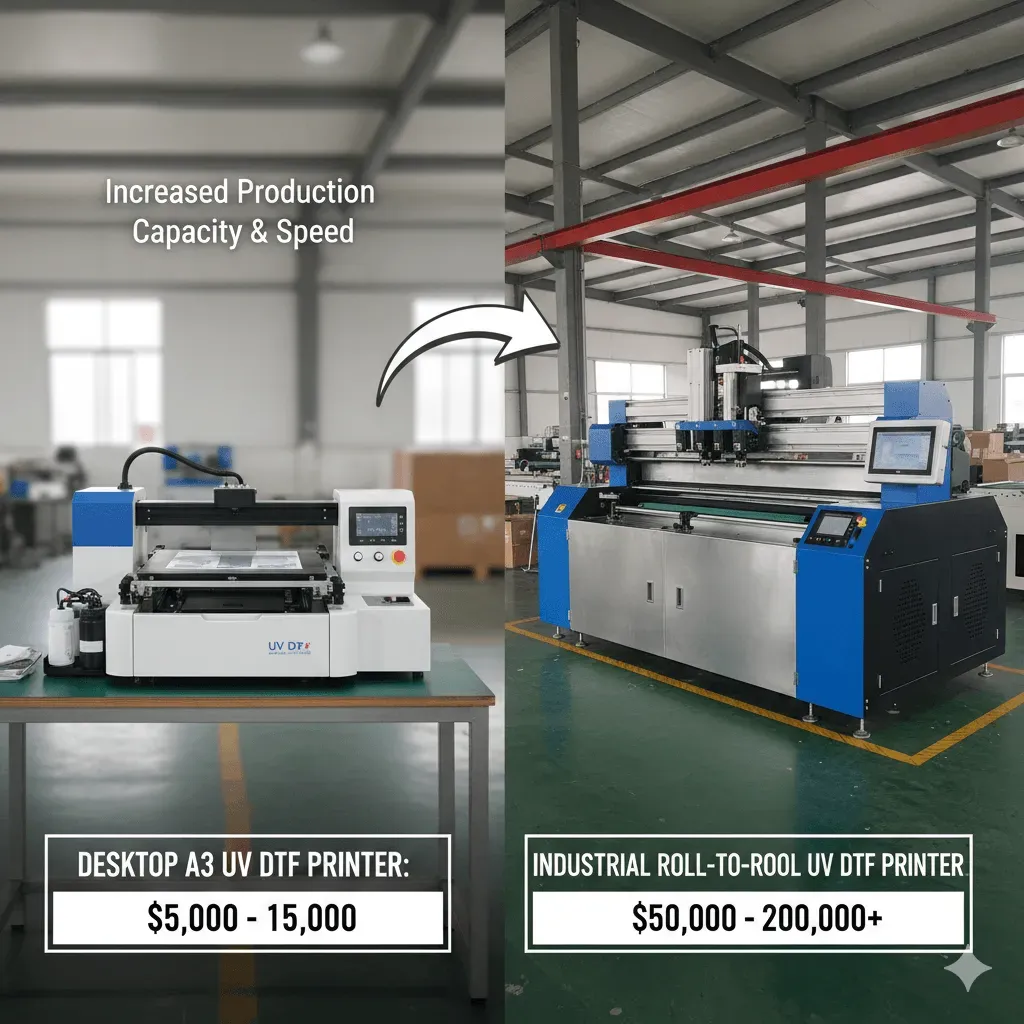
DTF printing cost breakdown offers a practical lens for understanding where every dollar goes when adopting Direct-to-Film technology. A clear view of Direct-to-Film cost per print helps you price projects accurately and protect margins as you scale. Understanding the upfront equipment and ongoing consumables lets you budget with confidence. This framework reveals how payback, maintenance, and workflow choices influence the bottom line. With this clarity, you can communicate value to clients and keep quality consistent across runs.
From a different angle, think of the expense stack behind Direct-to-Film transfers as a production budget rather than a single sticker price. By framing costs as upfront capital, including DTF printer cost, per-unit materials, labor, and overhead, you connect pricing to real-world workflow, throughput, and quality control. You can also describe the math as cost per garment or cost per sheet of film, then add maintenance cycles and part replacements to capture long-term reliability. Using multiple related terms—such as DTF supplies and maintenance, throughput, and waste reduction—helps search engines index the topic and guides readers through decision making. In the end, the aim is to align unit costs with value delivered—durable prints, vibrant color, and timely fulfillment—so growth stays profitable.
DTF printing cost breakdown: mapping upfront and per-print costs
As you plan a DTF operation, it helps to separate costs into upfront investments and ongoing per-print expenses. The DTF printing cost breakdown model guides pricing, budgeting, and profitability by translating everything from the printer cost to consumables into a per-shirt figure. Key LSI terms to keep in mind include Direct-to-Film cost per print, DTF printer cost, and DTF supplies and maintenance, which all interact as volume changes.
By projecting monthly output and allocating fixed costs across those units, you can see how scale reshapes your margins. The framework covers upfront equipment (DTF printer cost, heat press, curing dryer) and ongoing costs (DTF film price, ink, adhesive powder, and maintenance) to calculate a realistic cost per print and identify savings opportunities.
Upfront equipment investments for DTF printing
Your largest single line item is often the initial package: a DTF printer, a heat press, curing or drying equipment, and a workspace. The DTF printer cost varies widely by width, ink technology, and features, with new models ranging from a few thousand to five figures. Understanding these numbers helps you choose between new, used, or refurbished options while weighing warranty and expected monthly print volume against total cost of ownership.
Additionally, you need to account for finishing hardware and software: a reliable heat press with accurate temperature control, curing equipment that matches your workflow, and RIP software with color profiles. Even though some buyers can defer some purchases, a well-matched setup reduces downtime, improves consistency, and lowers maintenance costs over time—factors that affect the long-term DTF printing cost breakdown.
Consumables and per-print costs in DTF printing
Consumables dominate the per-shirt economics. DTF film price and ink consumption are the most visible levers, but adhesive powder, finishing powders, and cleaners also add up with each transfer. The cost per print can swing with brand choice, film thickness, and storage conditions, so testing different combinations helps you optimize the Direct-to-Film cost per print while maintaining durability and wash-fastness.
Plan for waste and reprints by optimizing layout, reducing misprints, and selecting materials with favorable adhesion and wash durability. Regular maintenance of the printer and periodic replacement parts such as wiper pads or maintenance cartridges also tie back to DTF supplies and maintenance, ensuring consistent output and predictable per-unit costs.
Labor and efficiency: how labor influences Direct-to-Film cost per print
Labor sits at the intersection of quality and cost. Design setup, color matching, RIP processing, loading prints, powder application, transferring, curing, and finishing all contribute to the time per garment. Efficient prepress and automation lower ink and film waste, shrink cycle times, and the overall Direct-to-Film cost per print by reducing per-unit labor hours.
Skilled operators tend to deliver faster turnaround with fewer misprints, enabling you to spread fixed costs further across each batch. Training, process documentation, and standardized workflows help you realize incremental savings in labor, while maintaining quality that justifies your price to customers.
Scaling production: how volume reduces DTF costs
Volume matters because fixed costs like depreciation, software, and maintenance get allocated over more units. As monthly output climbs, the per-shirt share of DTF printer cost, heat press depreciation, and facility overhead tends to fall, while material efficiency and throughput improve with batch processing and lay-flat layouts. This is the classic cost-per-print dynamic you expect from a scalable process.
Bulk purchases of film and ink, plus routine maintenance, can improve margins when you schedule larger runs. If you add automation or upgrade equipment only when utilization is high, you maximize the likelihood of realizing lower cost per print without over-investing in idle capacity.
Budgeting, maintenance, and cash flow for DTF projects
Effective budgeting begins with volume projections, expected mix of products, and a plan for maintenance contingency. Consider DTF printer cost for depreciation, monthly software or subscription, and insurance, then layer in projected consumables to estimate the true monthly cost per print.
Cash flow planning should include potential financing terms and a plan for spare parts and repair costs. Staying current with manufacturer maintenance schedules and investing in reliable components reduces downtime and protects margins, aligning your DTF cost structure with your pricing strategy.
Frequently Asked Questions
What is the DTF printing cost breakdown and how does it influence the Direct-to-Film cost per print?
The DTF printing cost breakdown splits costs into upfront equipment, consumables, labor, and overhead. The Direct-to-Film cost per print is calculated by allocating fixed monthly costs across your monthly output and adding variable per-print costs like the DTF film price and ink. Understanding this breakdown helps set pricing and improve margins.
How should I account for DTF printer cost within the DTF printing cost breakdown when budgeting capital expenditures?
DTF printer cost is a major upfront expense and a fixed cost. Include the purchase price, depreciation, or lease payments in your fixed-cost bucket, and allocate a portion to each printed item based on expected monthly volume. This directly affects your cost per print and pricing decisions.
What factors drive DTF film price and how does it fit into the DTF printing cost breakdown?
DTF film price varies by brand, thickness, sheet size, and waste. Treat film as a per-print variable cost within the DTF printing cost breakdown and optimize layout and trimming to minimize waste and drive down the cost per shirt.
How do DTF supplies and maintenance contribute to the per-print cost in the Direct-to-Film cost per print?
DTF supplies include ink, adhesive powder, finishing materials, and consumables, while maintenance covers parts and service. Track usage per print and schedule regular maintenance to avoid downtime; both add to the Direct-to-Film cost per print and overall profitability.
How can I optimize the DTF printing cost breakdown to lower the Direct-to-Film cost per print without sacrificing quality?
Focus on layout efficiency to reduce film waste, select cost-effective but reliable film and powders, streamline prepress work, and implement preventive maintenance. Use the cost breakdown model to quantify which levers move the per-print cost most for your volumes.
Which areas in the DTF printing cost breakdown most influence the Direct-to-Film cost per print as you scale?
Fixed costs like DTF printer cost and depreciation influence the per-print price most at low volumes, while variable costs like DTF film price and inks dominate at higher volumes. As you scale, spreading fixed costs over more units typically lowers the Direct-to-Film cost per print, and efficiency gains in labor can further improve margins.
| Category | Key Points |
|---|---|
| Upfront equipment costs (capital expenditures) | DTF printer: price range varies; consider print width, ink tech, warranty. Heat press and finishing equipment (e.g., 15×15 or 16×20 in). Curing/drying equipment may be needed. Software and workflow setup (RIP, color profiles). Used/refurbished options can cut upfront costs but may add risk. |
| Consumables and per-print costs | DTF film (per sheet/roll), inks (volume depends on color count/print mode), adhesive powder, finishing powders/cleaners, wear items for printer/press. Waste reduction and proper layout help lower per-print costs. |
| Labor costs | Design/prepress time, RIP processing, loading/unloading, powder application, transfer/finishing, and operator efficiency. Skilled operators reduce waste and turnaround time. |
| Overhead and utilities | Electricity/gas, rent/insurance, packaging/shipping, and administrative software/IT costs. These are often allocated to production and affect unit economics. |
| Estimating cost per print (practical calculation) | Step 1: determine monthly fixed costs; Step 2: estimate monthly consumables; Step 3: estimate monthly labor; Step 4: allocate utilities/overhead; Step 5: total monthly cost ÷ expected monthly output = cost per print. |
| Strategies to optimize the cost breakdown | Optimize layout to reduce waste; choose cost-effective film and powder; streamline prepress; invest in maintenance; monitor pricing; scale thoughtfully to improve per-unit costs. |
| DTF cost breakdown vs other methods | DTF sits between DTG and screen printing: moderate upfront costs, relatively low per-unit materials, scalable for mid-volume runs; offers a balance for small-to-mid runs across fabrics. |
| Budgeting considerations | Volume projections, margins by product, maintenance contingency, training, and cash-flow vs loan terms. |
| Common pitfalls and quick wins | Underestimating consumables, neglecting maintenance, ignoring post-processing time, and not testing new materials. Quick wins include careful tracking, regular maintenance, and test runs for new materials. |
Summary
This HTML table outlines the key points of the base content on DTF printing cost breakdown, organized by cost categories, practical calculations, optimization strategies, comparisons with other methods, budgeting considerations, and common pitfalls.