
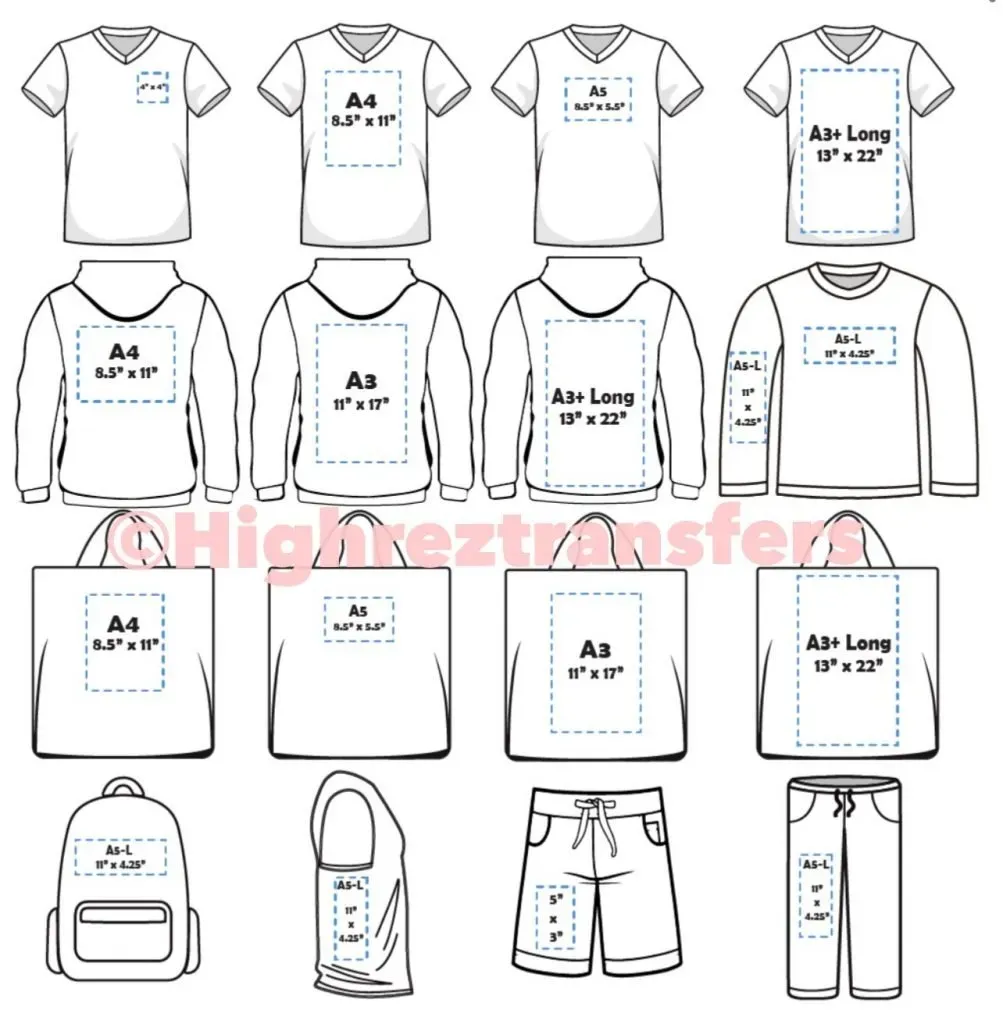
In the dynamic world of custom apparel, understanding **DTF transfer sizes** is fundamental for those seeking to create stunning printed garments. DTF printing, or Direct to Film printing, is captivating both hobbyists and professionals alike with its ability to produce remarkably vivid colors and intricate designs. The range of DTF transfer sizes can profoundly influence the final look and feel of your garments, making it crucial to select the right dimensions for your unique projects. As we delve into the various transfer sizes available within this innovative printing technique, we will also explore how they impact the overall quality of your custom apparel. Get ready to optimize your garment printing process with insights that will elevate your design game!
When discussing **DTF transfer dimensions**, it’s essential to recognize the correlation with various printing methodologies. The versatility of this transfer printing approach allows designers to tailor their projects meticulously, catering to the specific needs of each garment. By exploring the intricacies of various transfer sizes, we can better understand how they contribute to the broader spectrum of garment printing possibilities. Whether you’re creating customized apparel for promotional purposes or personal use, knowing how to leverage these dimensions will undoubtedly enhance your results. This exploration aims to shed light on the art of achieving perfect designs through thoughtful transfer size selection.
Understanding DTF Transfer Sizes for Optimal Results
When it comes to DTF printing, selecting the right transfer size is crucial in achieving the optimal design impact on apparel. The sizes available range from small transfers suitable for logos to large ones that can dominate an entire garment. For instance, small transfers typically measuring around 8″ x 10″ are excellent for placing discreet branding out of the way but still visible, while large transfers exceeding 20″ x 30″ capture attention with elaborate graphics that embellish the fabric beautifully. Understanding the nuances of transfer sizes allows businesses to communicate effectively with their customers about the best resolution for their projects.
Moreover, each transfer size comes with its unique considerations regarding garment compatibility and intended design aesthetics. When choosing the appropriate DTF transfer size, it’s important to consider not only the artwork’s intricacy but also how well it aligns with the dimensions and cut of the clothing. A comprehensive grasp of common DTF transfer sizes—small, medium, and large—equips designers with the knowledge needed to make informed decisions that enhance the overall look of custom apparel.
Advantages of Using DTF Printing
DTF printing stands out among various printing techniques due to its multitude of advantages. One of the most significant benefits is the vibrant color reproduction that DTF technology offers. It uses a diverse palette of inks, ensuring your designs stand out brightly, regardless of the fabric type. This is especially important in the custom apparel industry, where the visuals can make or break the attractiveness of the product. Additionally, DTF transfers exhibit remarkable versatility since they adhere well to different materials such as cotton, polyester, and blends, opening up a vast range of garment options for designers and businesses.
Another advantage of DTF printing is its durability. Transfers made using DTF methods are engineered to withstand numerous washes and maintain their vibrancy over time. This ensures that investments in custom apparel yield long-term returns, as consumers can confidently wear their garments without fear of fading or peeling. When businesses prioritize durability in their custom printing solutions, they not only enhance customer satisfaction but also contribute to positive brand loyalty and trust.
Essential Factors in Choosing the Right DTF Transfer Size
Choosing the right transfer size for your DTF printing project goes beyond mere aesthetics; it’s about strategic decision-making informed by various factors. One of the primary considerations is the garment dimensions. Understanding the shape and fit of the clothing item helps businesses select a transfer size that not only fits well but also complements the overall design. For example, placing a large transfer on a fitted shirt could overwhelm the design, while a smaller transfer could be lost on a looser garment.
In addition to garment dimensions, the complexity of the design plays a vital role in determining the appropriate transfer size. More intricate designs necessitate larger transfers to ensure that all details are captured without distortion. Conversely, simpler designs can be effectively showcased using smaller transfers. The placement of the design is equally important, as transfers on visible areas, such as the front or back of t-shirts, may require larger sizes to create striking visuals, while smaller transfers can elegantly grace the sleeves or hems.
The Versatility of DTF Transfer Applications
The versatility of DTF transfers makes them suitable for a wide range of applications within the custom printing field. Small transfers can be particularly useful for branding, permitting businesses to incorporate logos in a way that is subtle yet effective. This format allows for consistent branding across various clothing items without overwhelming other design elements, particularly on polos or jackets.
Medium and large transfers, on the other hand, open avenues for creativity and bold expressions. These larger formats are ideal for t-shirts, jackets, and promotional wear, where making an impactful statement is paramount. Innovative designs can be executed that cover significant areas of the garment, thus captivating attention and ensuring the prints resonate with target audiences.
Technical Considerations for Quality DTF Printing
Understanding the technical aspects of DTF printing is essential for achieving high-quality results. Printer specifications greatly affect the quality of the DTF transfers. Higher-end DTF printers are designed to handle a broad range of transfer sizes, ensuring intricate details remain sharp and vibrant on fabric. In contrast, basic printers may struggle with larger transfers, risking the fidelity of the design.
Additionally, the quality of ink used is vital in producing durable and colorful prints. Utilizing high-grade inks tailored for DTF printing ensures that colors appear vivid and maintain their integrity over time, giving garments a professional finish. Choosing the right printer and ink combination can significantly enhance the quality of the printed designs, which ultimately reflects the brand’s commitment to excellence in custom apparel.
Emerging Market Trends in DTF Printing Sizes
The DTF printing landscape is rapidly evolving with new market trends shaping how businesses operate within the custom apparel sector. One notable trend is the growing demand for personalized and customizable DTF transfer sizes. Consumers increasingly seek unique designs that cater specifically to their preferences, prompting companies to offer tailored printing solutions that accommodate various transfer dimensions. This shift towards customization not only enhances customer engagement but also elevates brand differentiation in a competitive market.
Additionally, there’s a significant movement towards eco-friendly printing solutions in the DTF market. Brands are now more focused on sustainability, utilizing environmentally friendly DTF materials and processes. This trend appeals to eco-conscious consumers, creating an intersection between quality apparel and social responsibility. As manufacturers adapt to this shift, they can capitalize on consumer willingness to invest in products that align with their values, thereby enhancing brand loyalty and growth opportunities.
Frequently Asked Questions
What sizes are available for DTF transfers in custom apparel printing?
DTF transfers are available in various sizes, typically categorized as small (around 8″ x 10″), medium (about 12″ x 16″), and large (exceeding 20″ x 30″). The right size depends on the garment type and design complexity, ensuring optimal placement and visual appeal.
How do DTF transfer sizes affect garment printing outcomes?
The size of DTF transfers significantly influences the printing outcome. Small transfers are ideal for logos, medium sizes offer a balance for t-shirts, while large transfers make bold statements with intricate designs. Choosing the correct size optimizes the design’s visibility and detail on the fabric.
Can I customize DTF transfer sizes for my DTF printing projects?
Yes, many businesses offer customizable DTF transfer sizes to meet specific design requirements. This flexibility allows you to create unique custom apparel that effectively showcases your branding or designs, catering to various garment dimensions and styles.
What considerations should I keep in mind when selecting DTF transfer sizes?
When selecting DTF transfer sizes, consider the garment dimensions, design complexity, and placement. Ensuring that the transfer size complements the garment and enhances the design is crucial for achieving a visually appealing finished product.
Are there advantages to using larger DTF transfer sizes for garment printing?
Yes, larger DTF transfer sizes allow for expansive graphics and intricate designs that can dominate a garment’s surface. They are particularly effective for promotional items or designs that aim to capture attention, maximizing the visual impact on custom apparel.
What impact do DTF transfer sizes have on the durability of prints?
DTF transfer sizes do not directly influence durability, but selecting the right size can affect how well the design adheres to the fabric and its overall look. Properly chosen sizes ensure that prints withstand wash cycles while maintaining vibrancy and longevity.
| Key Aspect | Description |
|---|---|
| What is DTF Transfer? | A printing technique where designs are transferred from film to fabric using heat, resulting in vibrant, durable prints on various materials. |
| Common DTF Transfer Sizes | Sizes vary to include small (8″x10″), medium (12″x16″), and large (20″x30″), each suited for different applications and designs. |
| Choosing the Right Size | Consider garment dimensions, design complexity, and placement on the garment to select an appropriate transfer size. |
| Benefits of Various Sizes | Different sizes cater to branding needs and design balance, from subtle logos to bold full prints, enhancing visual appeal. |
| Technical Considerations | Printer specifications and ink quality significantly affect the outcome of prints, especially for larger transfers. |
| Market Trends | Trends include greater customization, eco-friendly materials, and broader applications beyond apparel, aligning with consumer preferences. |
Summary
DTF transfer sizes play a crucial role in the effectiveness and quality of your printed designs. By understanding the various sizes available and considering the nature of your garment along with the complexity of your design, you can achieve an aesthetic that resonates well with your audience. The flexibility to choose from small to large transfers allows businesses to cater to diverse needs, whether they’re focusing on subtle branding or impactful graphic statements. Staying updated on market trends and technical advancements further enhances your ability to create stunning designs. Ultimately, mastering DTF transfer sizes empowers you to make informed choices, ensuring your projects stand out in the evolving landscape of custom printing.